
Verifying a Document's Final Form: A Deeper Look at Professional Proofreading

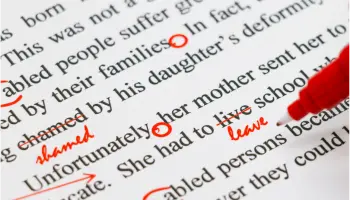
When a document's journey nears its end, the focus shifts from creation to validation. Many believe that automated spell-checkers offer a sufficient final pass, yet this view can lead to significant and often unseen missteps. While these tools can catch a misspelled word, their capabilities stop at surface-level errors. They often fail to identify issues with a phrase that is technically correct but contextually wrong, or inconsistencies in formatting and style that can erode a reader's confidence. The methodical act of professional proofreading serves as an essential final inspection, ensuring the message is not only accurate but also conveys authority and competence.
The Overlooked Nuances of Professional Review
A skilled review process is about more than finding typos; it is about establishing a document’s credibility. A professional’s eye discerns subtle errors that software cannot, such as a word that is spelled correctly but used incorrectly. This type of mistake can easily alter the meaning of a sentence. A thorough review also ensures that every element of the document, from punctuation to capitalization, is consistent and deliberate.
A professional's objective perspective provides an important defense against the biases of familiarity. After spending many hours immersed in a document, an author's mind often anticipates the correct wording, making it easy to miss errors that are obvious to an outside observer. A fresh set of eyes can catch the small mistakes that separate a compelling piece from a confused one, signaling a dedication to a high standard. This meticulous attention to detail is crucial for creating professional materials.
The strategies for a precise review can be tactical and straightforward, yet they require discipline. Approaching the task with a planned methodology can yield notable improvements in the final result. Some of these practices may include:
Taking a Planned Pause: Finish your draft a day or more before your final submission date. Returning to your writing with a fresh mind can help you see it as a reader would. The distance helps you notice awkward phrasing, logical gaps, or grammatical errors that were hidden during the writing process. This space helps to uncover issues that your brain might otherwise overlook.
Reading from a Different Medium: Reviewing a printed copy rather than a screen can alter your perspective. This simple shift in medium can make it easier to spot errors and inconsistencies, as your brain processes the physical text differently. It forces a more deliberate and careful examination, aiding in finding errors that might be missed in a quick digital read-through.
Reviewing from a New Direction: You can examine the document from the last sentence to the first. This counterintuitive approach forces you to focus on each sentence as an individual unit rather than reading for the overall story. This method helps to identify errors in grammar or syntax that are difficult to spot when your focus is on the document's flow and narrative.
Creating a Polished Document
While these methods can help improve a document, the complexity of language often demands a deeper level of scrutiny. A true professional recognizes that a document’s credibility is not just about its content, but also its presentation. Even a single error can raise doubts about an entire argument or idea. For instance, consider a legal brief or a business proposal: an inconsistent citation style or a misused term could undermine the author's argument, regardless of the quality of the research.
A meticulous review goes beyond the simple mechanics of language. It also checks for the document’s overall voice and purpose. Does the tone match the audience? Is the language clear, or is it filled with confusing jargon? Are the key points presented in a compelling way? This level of examination can mean the difference between a message that is ignored and one that resonates deeply with its intended audience.
Scribe & Pen provides a comprehensive suite of professional writing and paralegal services designed to meet a wide range of business needs. We specialize in producing clear, professional materials, and we can assist you with your professional communications, from initial drafting to a final, careful proofreading. Our services extend to ensuring all your written materials are polished and professional, allowing you to present your ideas with confidence. By engaging our services, you can concentrate on your core business operations while we handle the intricacies of creating powerful, professional materials.

Comments